India's ODI Series Against Afghanistan: A Test of Bench Strength
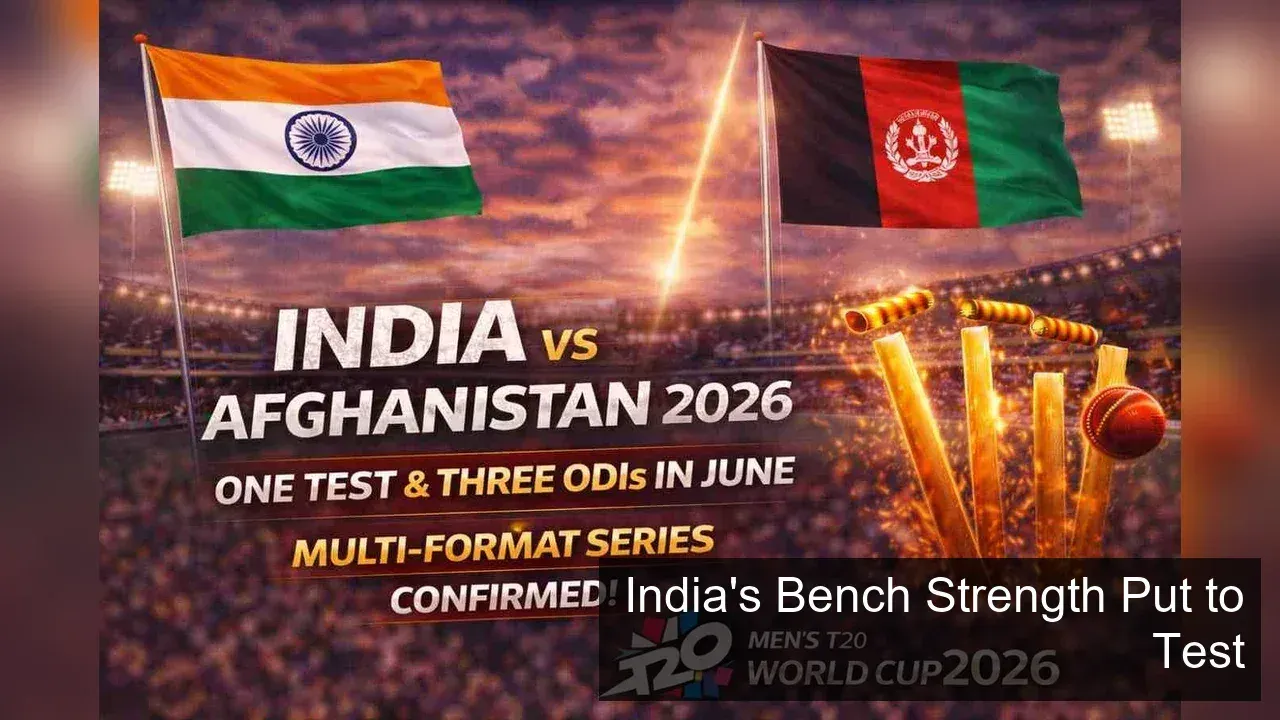
With key players ruled out by injury, India turns to the first-ever bilateral ODI series against Afghanistan to experiment with new batting combinations and evaluate emerging talent ahead of the 2027 World Cup.
The road to the 2027 ODI World Cup, scheduled to be hosted by South Africa, Zimbabwe, and Namibia in October and November, begins on June 13 in Dharamsala. This three-match series marks the first-ever bilateral ODI encounter between India and Afghanistan. While India enters the series with a dominant head-to-head record of 13-0 across all formats since 2010, the squad facing the spirited Afghan side is undergoing a significant transition. With several stalwarts absent, the series serves as a critical laboratory for coach Gautam Gambhir and captain Shubman Gill to test the team's depth and tactical flexibility.
Navigating the Absence of Virat Kohli
The most significant void in the Indian lineup is the absence of Virat Kohli, who has been ruled out of the series due to a hamstring injury sustained during the IPL 2026 final. Bowling coach Morne Morkel has acknowledged that Kohli is a big miss, noting that the senior player's ability to anchor the innings, particularly during the middle phase, is virtually irreplaceable. However, the management views this as a new opportunity for other players to fulfill that pivotal role.
The battle for the No. 3 slot is expected to be a focal point of the series. Morne Morkel has indicated that the team intends to rotate two or three different batters in this position to determine the best structure for the squad. Three prominent names—Yashasvi Jaiswal, KL Rahul, and Ishan Kishan—are being considered for the role. While Ishan Kishan was originally picked as a backup opener and wicketkeeper, the management's long-term desire to have a southpaw in the top three may influence the selection of either Kishan or Jaiswal. Current observations show Ishan Kishan has had extended sessions with fielding coach T Dilip, suggesting he may don the gloves, which could leave the No. 3 spot open for Jaiswal or a promoted KL Rahul.
The movement of KL Rahul presents a tactical dilemma; having established himself at No. 6 and served as the primary wicketkeeper in ODIs for the last three years, moving him to No. 3 could leave the middle order looking fragile. Additionally, vice-captain Shreyas Iyer remains in the fray as a potential option for the batting order.
Rohit Sharma's Return and Fitness
While Kohli remains sidelined, the Indian team welcomes back skipper Rohit Sharma for the series opener on June 13. Rohit's return follows a period of rehabilitation after suffering a right hamstring injury in April. Despite reports that the 38-year-old practiced wearing different thigh pads to protect the injured area, Morne Morkel has dismissed concerns regarding his fitness, confirming that Rohit passed all necessary fitness tests and was among the first to practice at the HPCA Stadium in Dharamsala. Morkel emphasized that Rohit's presence brings a necessary calmness to the team and a positive influence on the squad's morale.
Identifying All-Round Alternatives to Hardik Pandya
The search for versatility has been accelerated by the absence of Hardik Pandya, who missed the series after picking up a niggle just before joining the camp. This void has opened the door for Nitish Kumar Reddy to prove his capabilities on the international stage. Morne Morkel has praised Reddy's development over the last couple of years, noting his technical improvements in balance and energy flow down the wicket, aided by work with Steffan Jones.
While Morkel admits that Reddy is not yet a "ready product" equivalent to Hardik Pandya, he believes the young all-rounder has earned his chance to make life difficult for the selectors. The management is eager to see how Reddy puts his skills together in a high-pressure environment, contributing across both batting and bowling departments.
Developing the Next Generation of Bowlers
The bowling attack is also seeing a significant shift in personnel. With Jasprit Bumrah rested for workload management and Mohammed Siraj also rested, the series is designed to expose the next generation of fast bowlers to international cricket. Morne Morkel has identified this as a vital step in building depth for the 2027 World Cup. Specific attention is being given to Prince Yadav and Gurnoor Brar, two pacers who impressed Morkel during a one-off Test against Afghanistan held from June 6-8, 2026, at the MYAS Stadium in Mullanpur, where India won by an innings and 300 runs.
Morkel praised the composure and work ethic of Prince and Gurnoor, stating they were "accurate and on the money," appearing as though they had been part of the squad for five years. The challenge for captain Shubman Gill will be managing these resources effectively, especially in the absence of seasoned bowlers like Bumrah and spinners Axar Patel and Ravindra Jadeja.
Conclusion: A Strategic Balancing Act
For India, the three-match series in Dharamsala, Lucknow, and Chennai is less about the final result—given their flawless record against Afghanistan—and more about strategic exploration. Captain Shubman Gill faces scrutiny over his tactical nous following losses to New Zealand and Australia last year. His ability to rotate the No. 3 position and integrate young talents like Nitish Kumar Reddy, Prince, and Gurnoor will be a key metric of success. Conversely, Afghanistan arrives on a roll, having won their last five bilateral series, including victories over South Africa and two wins over Bangladesh. While they have never beaten India in 14 matches since 2010, their current momentum makes them a spirited opponent for an Indian side testing its bench strength.