Sri Lanka vs West Indies: Central Contracts in Action During ICC Tour Series
An analysis of how Sri Lanka Cricket's central contracts and player selection influenced their recent tour of the West Indies, including squad dynamics, disciplinary challenges, and performance outcomes.
The strategic implementation of Sri Lanka Cricket central contracts is placing a spotlight on player performance and accountability during the Sri Lanka tour of West Indies 2026. As the national team navigates a high-stakes series, the intersection of contractual obligations and on-field execution has become evident, particularly in the management of the squad during the One Day International (ODI) leg of the tour. The professional structure governing the players was tested early in the series, manifesting not only in tactical selections at Sabina Park but also in the financial implications of disciplinary lapses.
Squad Composition and Performance at Sabina Park
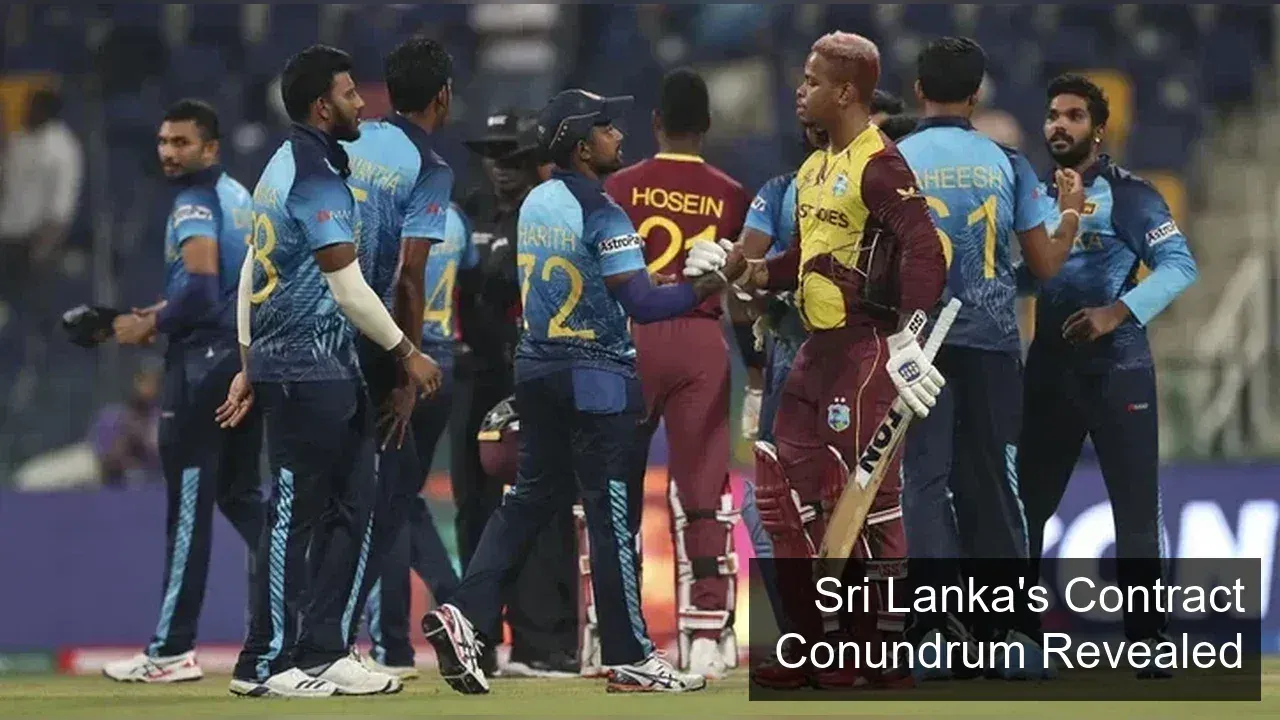
The influence of the central contracts system is most visible in the composition of the Sri Lanka squad for the 2nd ODI held on Saturday, June 6, at Sabina Park in Kingston, Jamaica. Under the leadership of captain and wicketkeeper Kusal Mendis, the side deployed a specialized lineup designed to compete in West Indian conditions. The playing eleven featured Pathum Nissanka, Kamindu Mendis, Charith Asalanka, and Janith Liyanage in the batting order, supported by the all-round capabilities of Wanindu Hasaranga.
The bowling attack, managed under the guidance of a comprehensive support staff including Gary Kirsten, Vikram Rathour, and Lasith Malinga, utilized Maheesh Theekshana and Dushmantha Chameera. The inclusion of Eshan Malinga and the Rathnayake pair—Pavan and Milan Priyanath—highlights the diverse talent pool maintained through Sri Lanka Cricket's contractual framework. To ensure depth, the bench featured Asitha Fernando, Dunith Wellalage, Kamil Mishara, Dilshan Madushanka, and Pramod Madushan, providing a robust reserve system for the tour's duration.
Contractual Accountability and ICC Sanctions
A critical aspect of the central contracts system is the adherence to international standards of play, a factor that came into play during the first ODI in Jamaica on June 3. Sri Lanka faced a disciplinary setback when they were fined 10% of their match fee for maintaining a slow over-rate. This sanction was applied in accordance with Article 2.22 of the ICC Code of Conduct for Players and Player Support Personnel, which dictates minimum over-rate offences.
The financial penalty was calculated based on a 5% fine for every over the side failed to bowl within the allotted time. In this instance, the team was two overs short of the target after time allowances were considered. The accountability for this lapse fell on captain Kusal Mendis, who pleaded guilty to the offence and accepted the proposed sanction, thereby bypassing the need for a formal hearing. This incident underscores the direct link between on-field management and the financial repercussions faced by players under their current contractual terms.
Comparative Success in Parallel Series
While the men's team navigated the challenges of the West Indies tour, the broader success of Sri Lanka's contracted talent is evident in other simultaneous competitions. On Saturday, June 6, 2026, the Sri Lanka Women's team delivered a commanding performance in a T20 World Cup 2026 warm-up match against Pakistan Women at the County Ground in Derby. The Sri Lankan side won by 9 wickets, scoring 169/1 in 18.3 overs in response to Pakistan's 168/8.
The dominance was fueled by a 160-run opening stand between Vishmi Gunarathne and Chamari Athapaththu. Athapaththu, in particular, made a significant statement by scoring 94 runs off 58 balls before being bowled by Eyman Fatima. The victory was rounded off by a disciplined bowling effort where Chethana Vimukthi took 4 wickets, ensuring a comprehensive result that contrasts with the tighter disciplinary margins seen in the men's tour of the West Indies.
Future Outlook and Developmental Pipeline
The long-term viability of the central contracts system is further evidenced by the integration of "A" team players and the scheduling of future series to maintain player readiness. Following the West Indies tour, Sri Lanka A is scheduled for a series of engagements. Between June 9 and June 21, Sri Lanka A will participate in a white-ball tri-series in Dambulla, competing against India A and Afghanistan A.
This developmental trajectory continues into the red-ball format, with Sri Lanka A set to play two four-day matches against India A in Galle from June 25 to July 5. These matches, held at the Galle International Stadium, serve as a critical bridge for players transitioning toward full central contracts, allowing the national board to evaluate performance in multi-day cricket before awarding long-term security.
Conclusion
The tour of the West Indies has served as a practical case study in how Sri Lanka Cricket manages its human capital. From the tactical squad selections at Sabina Park to the rigorous enforcement of ICC over-rate penalties, the central contracts system provides a framework of both opportunity and accountability. While the men's team continues to refine its discipline on the field, the overwhelming success of the women's team in Derby and the structured pipeline of the "A" team series suggest a comprehensive approach to national cricket development.