Beyond Bumrah: How India's Bowling Depth Creates Unmatched Flexibility for T20 World Cup Dominance
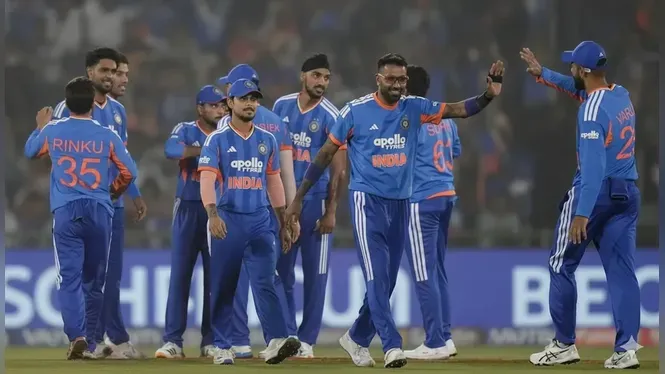
India's thunderous victory against New Zealand in Guwahati wasn't just another series win - it was a statement. As they clinched the T20I series with ruthless efficiency, Rohit Sharma's squad sent an unmistakable message to rivals: The 2026 T20 World Cup is India's title to lose. While Jasprit Bumrah's return has captured headlines, the real story lies deeper. India's true weapon isn't a single superstar, but a bowling attack so versatile it can dismantle opponents in any conditions.
The Problem: Cricket's T20 Arms Race Has Left Others Behind
Most T20 World Cup contenders face a harsh reality - their attacks lack the strategic depth to handle cricket's fastest format. Teams rely heavily on individual match-winners or specialize in either pace or spin, making them predictable. When conditions change or star bowlers have off days, they crumble. This vulnerability explains why no team has successfully defended a T20 World Cup title since 2012.
The Solution: India's Bowling Orchestra Conducted by Bumrah
India's recent demolition of New Zealand revealed their championship blueprint. Jasprit Bumrah's presence as the attack's centerpiece allows India to deploy tactical combinations no other nation can replicate:
1. The Powerplay Precision Unit
Bumrah's ability to contain runs while taking wickets in the first six overs frees partners to attack aggressively. His economy rate of under 6 in powerplays lets India pair him with wildcard options - whether Arshdeep Singh's swing or Mohammed Siraj's seam movement - creating early pressure that strangles opponents.
2. Middle-Over Mayhem Options
With Bumrah typically held back for death overs, India unleashes the world's most varied spin attack. Kuldeep Yadav's wrist-spin combines with Ravindra Jadeja's accuracy and Axar Patel's left-arm angles to exploit any pitch. This multi-spin approach forced New Zealand's collapse in the series decider, proving its tournament-winning potential.
3. Death-Over Domination
Bumrah's legendary final-over skills (career economy of 7.1 in death overs) allow India to gamble with part-time options earlier. Hardik Pandya's pace variations or Shivam Dube's surprise overs become viable because Bumrah provides the ultimate safety net when games tighten.
The Batting Firepower That Complements Bowling Brilliance
While bowling flexibility gives India their edge, their batting resurgence completes the championship puzzle. Suryakumar Yadav's return to form couldn't have been better timed. Consecutive fifties against New Zealand showcased his unique ability to accelerate or stabilize as situations demand. Combined with Rohit Sharma's power-hitting and Virat Kohli's anchoring skills, India now boasts what one analyst called "cricket's most formidable combination of big hitters."
The Unsettled Opening Slot: Blessing in Disguise?
While some question marks remain about India's opening partnership, this uncertainty actually strengthens their tactical flexibility. The team can deploy different combinations based on conditions - explosive starts on flat tracks or stable platforms on tricky pitches. This adaptability mirrors their bowling approach, making India unpredictable in all phases.
Why Rivals Can't Replicate India's Formula
Other contenders face impossible dilemmas. England's attack leans too heavily on pace. Afghanistan lacks quality pace backups for their world-class spinners. Australia struggles with death-over consistency. Only India possesses both elite specialists and versatile all-rounders in every department. As former coach Ravi Shastri observed during the New Zealand series: "When your number eight hitter can clear boundaries and your fourth-choice spinner would start for most teams, you're playing a different game."
The Road to History
No team has successfully defended a T20 World Cup title in over a decade. India's 2024 triumph positioned them for a historic repeat, and their current form suggests they're only getting stronger. With Bumrah peaking at the perfect moment ("the key to India's triumph gets into rhythm" as one report noted) and supporting cast members delivering career-best performances, this squad has the tools to overcome any challenge.
The Guwahati victory wasn't just about winning a series - it demonstrated a new paradigm in T20 cricket. India have moved beyond relying on individual brilliance to creating systems where every bowler enhances the others' strengths. As the World Cup approaches, rivals face an uncomfortable truth: Beating India requires solving a tactical puzzle no one has cracked yet. With batting firepower to back their bowling versatility, this Indian team isn't just favorite - they're architects of cricket's next evolution.