Jemimah Rodrigues: The Ultimate Cricket Chameleon Leading India's Adaptability Revolution

As India prepares for the ICC Women’s T20 World Cup 2026, Jemimah Rodrigues is redefining the role of the modern batter. Her willingness to embrace a "floating role" and shift batting positions provides India with a critical strategic edge.
In the high-stakes environment of international cricket, the ability to pivot is often the difference between victory and defeat. As the Indian women's cricket team intensifies its preparations for the ICC Women’s T20 World Cup 2026, one name has emerged as the embodiment of this tactical flexibility: Jemimah Rodrigues. By embracing a "chameleon-like" existence in the batting order, Rodrigues is not just filling gaps; she is leading a revolution in adaptability that could define India's success in the upcoming global tournament.
The Art of the Floating Role
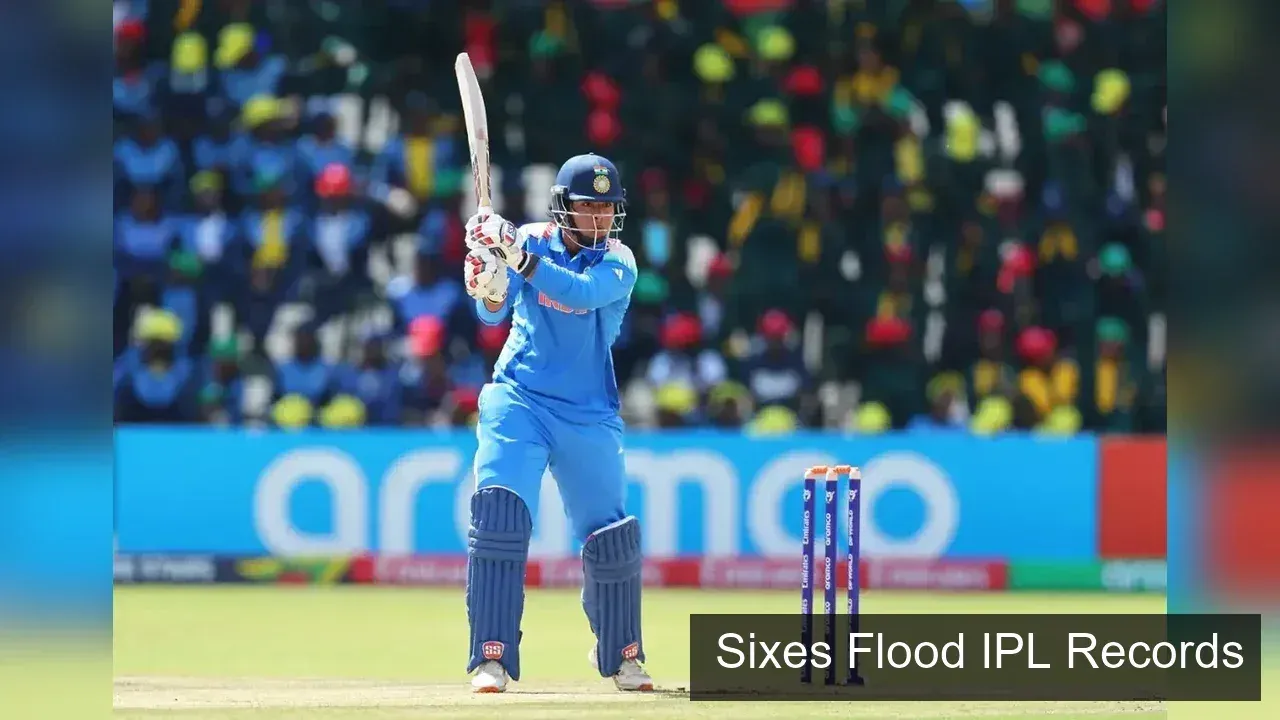
Adaptability is the cornerstone of the current strategy employed by India during their T20I series against England. For Rodrigues, this has meant a departure from a fixed position in favor of a floating role. While she previously occupied the No. 3 spot in matches against Australia and South Africa, the requirements of the team have shifted during the opening two matches against England. In these encounters, Rodrigues was asked to transition further down the order, batting at both No. 4 and No. 5.
This willingness to slide across the lineup without hesitation is a rarity in a sport where players often cling to a specific role. Rodrigues has expressed a high level of comfort with this versatility, noting that she is capable of performing at all positions. However, she emphasizes that this flexibility is predicated on one essential factor: clarity. When the team management provides a clearly defined role, Rodrigues believes she has the tools to go out and deliver results, regardless of where she sits in the order.
Strategic Experimentation Ahead of the World Cup
The ongoing series against England is serving as more than just a competitive fixture; it is a laboratory for the Indian coaching staff and support staff. With the ICC Women’s T20 World Cup 2026 approaching, the team is intentionally experimenting with different player combinations and batting positions to identify the most effective setup. Rodrigues herself acknowledges that the current phase is the ideal time to conduct these trials, stating that the team has a few more games to experiment and determine the best combination for the squad.
This approach to "role clarity" allows India to test how the lineup responds to different pressures and opponents. By shuffling players like Rodrigues, the management can assess the stability of the middle order and the efficiency of the transition between the top and lower-middle order. This strategic fluidity ensures that India will not enter the World Cup with a rigid plan, but rather a versatile arsenal of options.
Synergy and Character: The Return of Yastika Bhatia
The push for adaptability is not limited to Rodrigues alone, but is complemented by the return of other key personnel to the national setup. Yastika Bhatia, a left-handed batter, has rejoined the team after an absence of nearly two years due to injury. The integration of Bhatia provides India with a significant advantage, offering a different dynamic to the batting order just as the team is finalizing its plans for the World Cup.
Rodrigues has highlighted the importance of Bhatia's return, noting that the current series provides the necessary game time for the left-hander to regain her form. Pointing to Bhatia's performance in the first game of the series, Rodrigues remarked that coming back from a long-term injury to perform at that level requires a great deal of character. The presence of Bhatia, combined with the flexibility of Rodrigues, creates a batting unit that is increasingly difficult for opposing bowlers to predict.
Conclusion: A Blueprint for T20 Success
As India continues its tour of England, the focus remains on building confidence and refining the team's blueprint. The adaptability shown by Jemimah Rodrigues—moving from No. 3 against Australia and South Africa to No. 4 and No. 5 against England—serves as a model for the rest of the squad. By prioritizing team requirements over individual preference, Rodrigues is helping India cultivate a culture of versatility.
The path to the ICC Women’s T20 World Cup 2026 is being paved with these calculated experiments. With roles being clearly defined and players like Rodrigues embracing the challenge of the floating role, India is positioning itself as a team that can adapt to any situation. In the volatile landscape of T20 cricket, such adaptability is not just an asset—it is a necessity for any team aspiring to reach the pinnacle of the sport.