SRH's IPL 2026 Performance: A Wake-Up Call for Hyderabad Cricket Enthusiasts
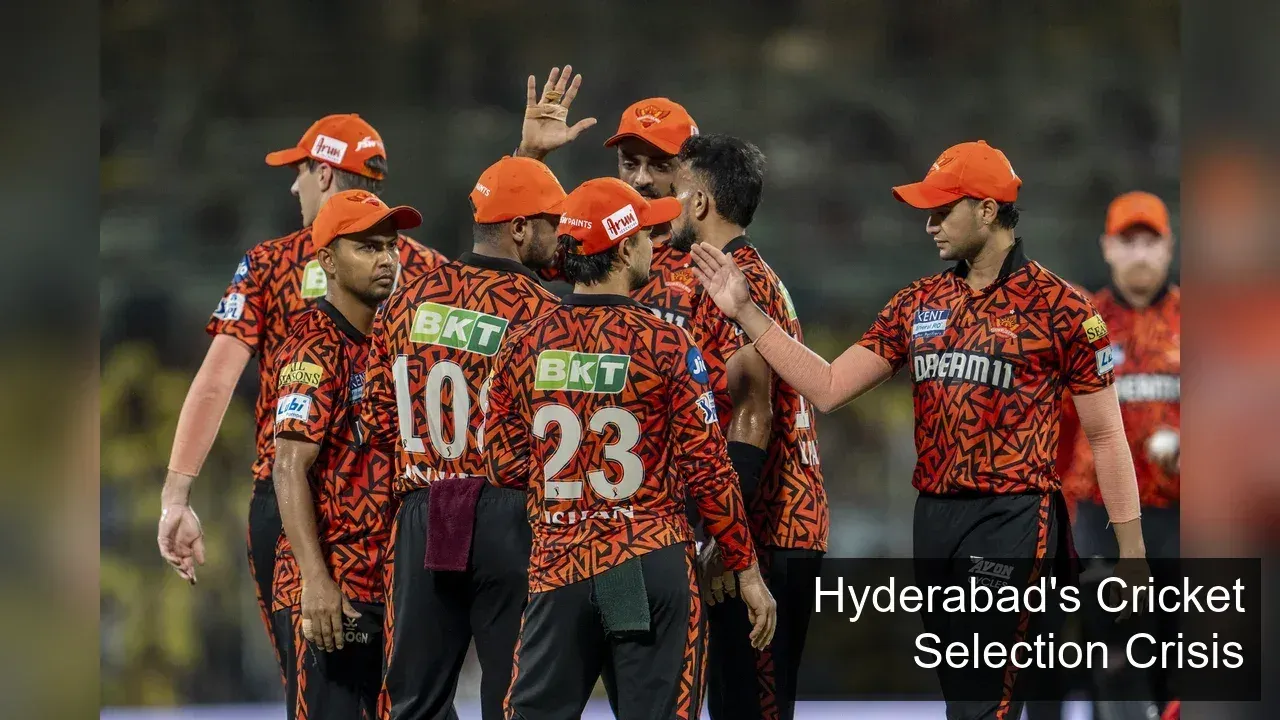
Despite a third-place standing, Sunrisers Hyderabad's inconsistent form and recent collapses highlight a need for strategic evolution. An analysis of their current trajectory and the importance of local talent pipelines.
For the followers of cricket in Hyderabad, the 2026 IPL season has been a journey of extreme contrasts. While Sunrisers Hyderabad (SRH) currently holds the 3rd position on the points table with 7 wins and 5 losses and a Net Run Rate (NRR) of 0.331, the surface-level success masks a volatile pattern of performance. The team's ability to secure victories is frequently undermined by sudden, catastrophic failures, suggesting that the current strategic framework requires urgent refinement to ensure long-term stability.
The Paradox of Performance: High Peaks and Deep Troughs
The inconsistency of SRH is best exemplified by their recent outings. On one hand, the team possesses high-impact performers like Heinrich Klaasen, who has amassed 508 runs, and Eshan Malinga, who has claimed 16 wickets. These statistics place SRH in a strong competitive position heading into their May 18th clash against Chennai Super Kings (CSK) at the MA Chidambaram Stadium. However, the fragility of the squad was laid bare in a recent encounter against the Gujarat Titans, where SRH was bowled out for a meager 86 runs, resulting in an 82-run defeat.
This disparity between dominating matches and suffering heavy collapses indicates a lack of middle-order resilience. While the squad features a diverse array of talent—including Travis Head, Abhishek Sharma, and Pat Cummins (c)—the inability to maintain a baseline of performance across all fixtures is a cause for concern. The reliance on a few standout individuals like Klaasen suggests that the team's success is heavily dependent on specific players rather than a cohesive, systemic approach to the T20 format.
Strategic Gaps and the Need for Selection Overhauls
The current SRH roster, which includes players such as Kamindu Mendis, Nitish Kumar Reddy, Liam Livingstone, and Harshal Patel, possesses significant raw power. Yet, the strategic application of this power has been uneven. The need for a more robust selection process is evident when comparing SRH's volatility to the clinical efficiency of other teams. For instance, Royal Challengers Bengaluru (RCB) recently became the first team to qualify for the playoffs of IPL 2026 after a 23-run victory over Punjab Kings (PBKS) on May 17, 2026, at the Himachal Pradesh Cricket Association Stadium.
RCB's success in that match, driven by a total of 222/4 and an unbeaten 73 from Venkatesh Iyer, demonstrates the importance of consistent high-scoring momentum. In contrast, SRH's tendency to fluctuate between high-scoring games and being bowled out for 86 suggests a gap in tactical adaptability. To bridge this, the Hyderabad Cricket Association must prioritize the identification of local talent through rigorous Hyderabad Cricket Association Selection Trials. Strengthening the pipeline of domestic players who can complement international stars like Travis Head and Pat Cummins is essential for building a squad that does not collapse under pressure.
The Science of the Modern Game
As the T20 era evolves, the technical aspects of the game are becoming increasingly scientific. The pressure to perform in franchise cricket has led to a surge in hyper-customized equipment. Paras Anand, CEO of Sanspareils Greenlands (SG), notes that bat-making has become a science of precision, with manufacturers using AI, analyst feedback, and player-specific profiling to maximize performance. Modern bats now typically range from 1.15 kg to 1.35 kg, a significant shift from the thinner, heavier bats used by legends like Sunil Gavaskar in the 1980s.
For SRH, integrating this level of precision—both in equipment and player profiling—could be the key to reducing inconsistency. When players are equipped with tools tailored to their specific metrics and the demands of the T20 game, the margin for error decreases. The focus on "science of precision" in bat-making mirrors the need for precision in SRH's player selection and match strategy. The team cannot rely solely on the inherent skill of the batter, as Harbhajan Singh suggests, but must also embrace the data-driven evolution of the sport.
Looking Ahead: The Road to Recovery
As SRH prepares for their match against CSK on May 18th, the stakes are high. While predictions give SRH a 55% chance of winning the match, with Praful Hinge tipped as a top bowler, the team must prove they can avoid another collapse. The contrast in form is stark: CSK sits in 6th position with 6 wins and 6 losses and an NRR of 0.027, yet they possess a stable core featuring Sanju Samson (450 runs) and Anshul Kamboj (19 wickets).
The wake-up call for Hyderabad cricket enthusiasts is clear: a 3rd place ranking is not a shield against systemic flaws. The transition from a team that "can" win to a team that "consistently" wins requires a commitment to the Hyderabad Cricket Association Selection Trials to find the next generation of resilient talent. By combining the raw power of their current stars with a scientifically backed approach to selection and preparation, SRH can transform their inconsistent performance into a championship-caliber campaign.