RCB's Winning Toss Strategy Dominates IPL 2026 Final
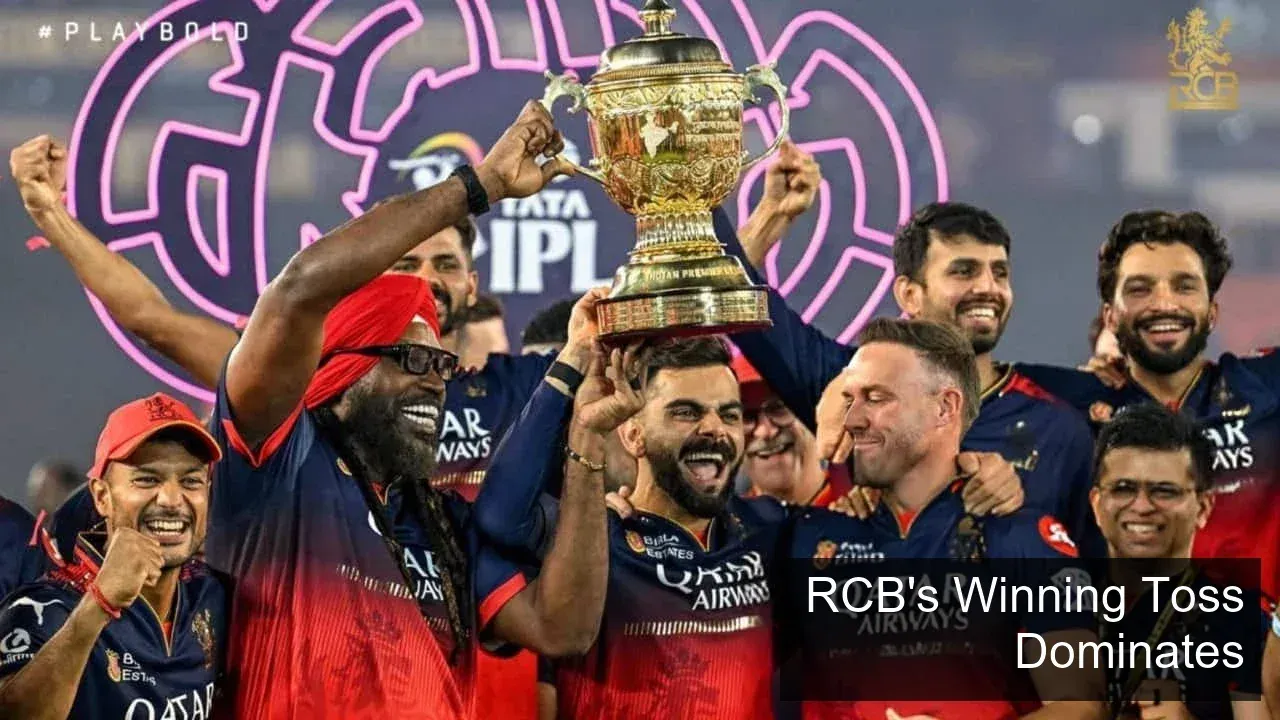
Royal Challengers Bangalore secured a decisive victory over Gujarat Titans in the IPL 2026 final at the Narendra Modi Stadium. A tactical bowling approach and clear individual roles were pivotal in restricting GT to 155/8.
The IPL 2026 final at the Narendra Modi Stadium culminated in a strategic masterclass by Royal Challengers Bangalore (RCB), who emerged victorious against the Gujarat Titans (GT). By winning the toss and implementing a disciplined bowling plan, RCB managed to stifle the GT batting lineup, ultimately restricting them to a total of 155/8. This result underscores a shift in tactical dominance, where RCB's preparation and role execution outweighed the efforts of the Gujarat side.
Tactical Bowling and Role Clarity
The foundation of RCB's success in the final was rooted in a precise tactical framework. Zaheer Khan, serving as a coach/mentor, highlighted that the team's success was primarily down to role clarity for their individuals. This clarity allowed the RCB bowling unit to execute their plans with precision against a GT lineup that included players like Shubman Gill and Buttler.
The strategic dominance was evident in the way RCB controlled the tempo of the game. By ensuring every player understood their specific objective, RCB was able to maintain pressure throughout the innings. This disciplined approach ensured that GT could not build significant momentum, leading to a final score of 155/8, a target that RCB successfully chased to win the match.
Analyzing the GT Performance and Redemption
For the Gujarat Titans, the final was a battle of adjustments. A key point of analysis following the match was the performance of Bhuvneshwar Kumar. Zaheer Khan noted that Bhuvneshwar's redemption in the tournament was specifically down to his increased pace. While this adjustment provided the Indian cricketer with a renewed edge, it was not enough to overcome the collective strategic pressure applied by the RCB side.
The match featured high-profile clashes, with Virat Kohli, the RCB captain and Indian cricketer, leading his team against the GT challenge. The interaction between the tactical setups of both teams at the Narendra Modi Stadium showcased the evolution of GT IPL strategy, though it ultimately fell short of the clinical execution displayed by RCB.
Key Individual Contributions and Impact
While the bowling strategy set the stage, the presence of key players ensured the victory was sealed. Rajat Patidar played a role for RCB in the final, contributing to the team's overall dominance. The match was not just a contest of skill but of passion and hunger, a sentiment echoed by Murali Kartik, another coach/mentor, who suggested that Virat Kohli's biopic should be titled 'Drive, Passion & Hunger' based on his leadership and performance.
Beyond the primary contenders, the emotional impact of the tournament was noted by Murali Kartik, who mentioned that Sooryavanshi made fans fall in love with cricket again. This atmosphere of high stakes and emotional investment provided the backdrop for RCB's tactical victory in the final.
Conclusion: A Blueprint for Success
RCB's victory in the IPL 2026 final serves as a testament to the importance of strategic planning and role definition. By restricting GT to 155/8, RCB proved that a well-executed bowling strategy, supported by the guidance of mentors like Zaheer Khan, Sehwag, and Murali Kartik, can dominate a high-pressure final. The match at the Narendra Modi Stadium concludes a tournament where RCB's ability to implement a winning toss strategy and maintain individual role clarity became the deciding factor in their championship success.