BCCI's Strategic Shift: How the Duleep Trophy Reflects the Future of Indian Domestic Cricket
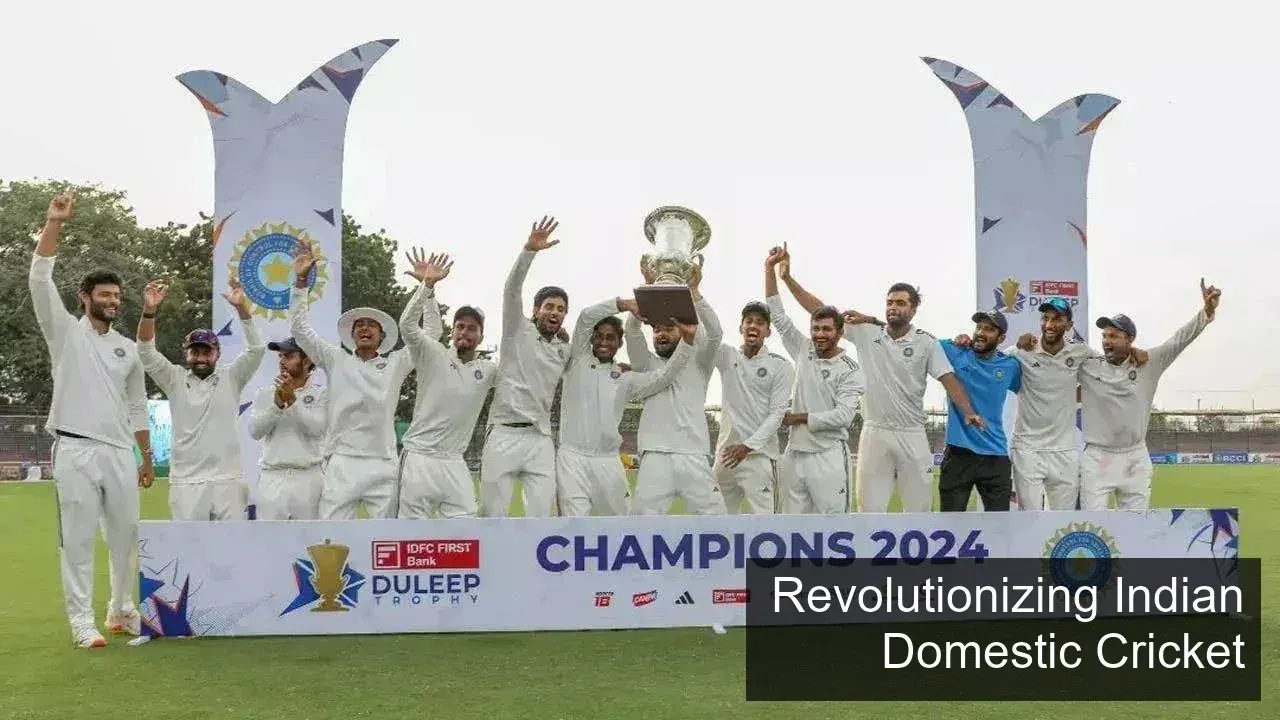
The BCCI is redefining its domestic calendar by repositioning the Duleep Trophy and integrating T20 formats into youth competitions. This strategic realignment aims to balance traditional first-class development with the evolving demands of the modern game.
The Board of Control for Cricket in India (BCCI) has unveiled a comprehensive schedule for the 2026-27 domestic season that signals a calculated shift in how talent is nurtured and evaluated. Central to this strategy is the Duleep Trophy, which is set to kick off the domestic calendar on August 23. By placing this premier tournament at the start of the season and concentrating its execution at the BCCI's Centre of Excellence in Bengaluru, the board is creating a high-intensity environment to gauge player readiness before the traditional Ranji Trophy begins.
The Zonal Revival and Structural Precision
The Duleep Trophy has returned to a zonal format, featuring six distinct teams: Central Zone, East Zone, North Zone, North East Zone, South Zone, and West Zone. This structure allows the BCCI to organize talent geographically while maintaining a rigorous competitive standard. For the 2026-27 season, the tournament will run from August 23 to September 10, providing a condensed window of elite first-class cricket.
The importance of this tournament as a talent pipeline is evident in the caliber of players involved. For instance, the 2025-26 edition saw the inclusion of players like Sai Kishore for South Zone, who brought a record of 203 wickets in 48 first-class matches and 13 five-wicket hauls. Similarly, Kumar Kushagra represented East Zone with 1,512 runs in 24 first-class matches, including 3 centuries and 4 fifties. Other notable participants included Manav Suthar for Central Zone, who has 95 wickets in 23 first-class matches and 734 runs, and Nishant Sindhu for North Zone, who recorded 1,708 runs and 63 wickets in 28 first-class matches.
Integrating Modern Formats into the Pipeline
While the Duleep Trophy preserves the sanctity of the long-form game, the BCCI is simultaneously evolving its youth structures to match the global shift toward shorter formats. In a notable change for the 2026-27 season, the BCCI has decided to shift the U-23 one-day tournament and the inter-zonal university competition for the Vizzy Trophy to the T20 format. This decision is explicitly designed to align with the evolving demands of the modern game.
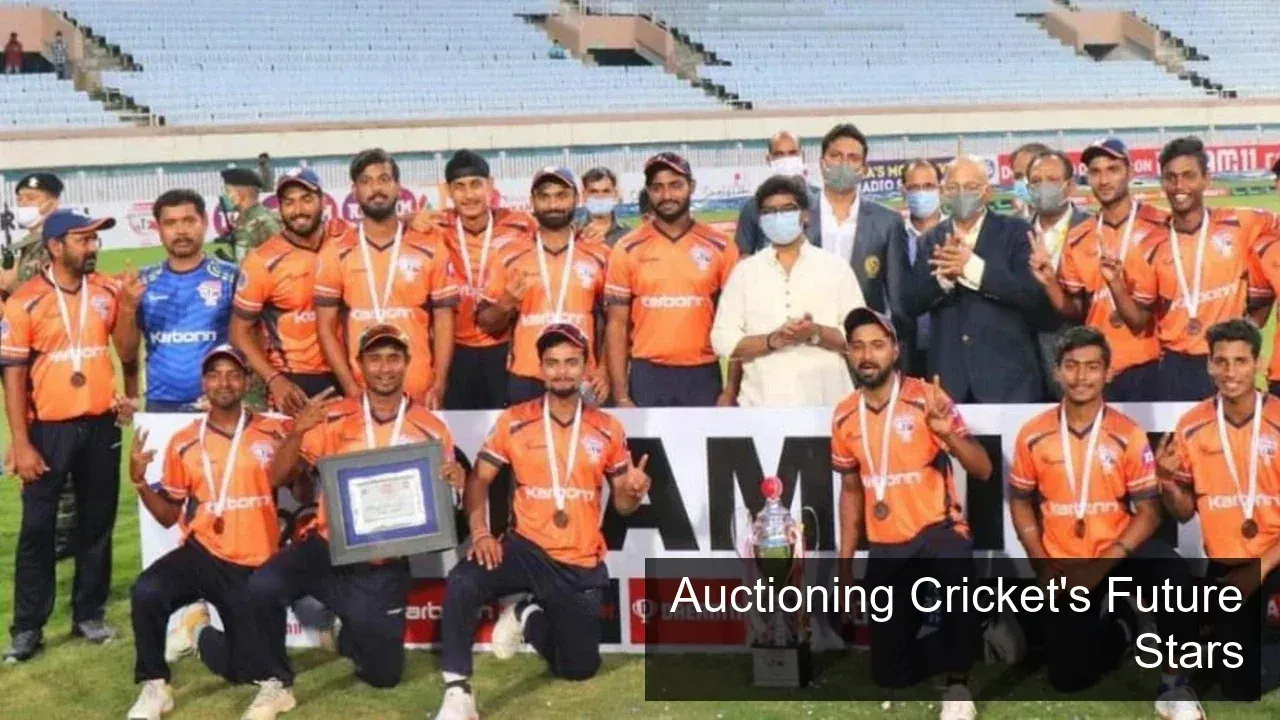
This transition is part of a massive domestic operation involving 1,788 matches across men’s and women’s cricket. The scope of this commitment extends across multiple age categories, including U-16, U-19, and U-23 for both men and women, alongside their respective senior tournaments. By diversifying the formats at the youth level, the BCCI ensures that players are versatile and prepared for the various demands of international and franchise cricket.
Strategic Scheduling and the IPL Ecosystem
The 2026-27 calendar demonstrates a sophisticated understanding of the relationship between domestic performance and professional scouting. The Syed Mushtaq Ali Trophy (SMAT), the national T20 competition, is scheduled between November 14 and December 6. The league stages will be hosted in Mumbai, Mohali, Vizag, and Kolkata, with the knock-out stage taking place in Nagpur. This specific timing is intended to allow talent scouts to prepare their lists before the IPL auction, which is scheduled for December.
Following the SMAT, the Vijay Hazare Trophy (the national 50-over meet) will run from December 14, 2026, to January 8, 2027. This sequence ensures that players are tested in T20 and One Day formats immediately before the second phase of the Ranji Trophy, which will take place from January 17 to March 3, 2027. The first phase of the Ranji Trophy is scheduled for October 11 to November 5, featuring four rounds.
Player Welfare and Holistic Development
Beyond elite performance, the BCCI's strategic shift includes considerations for the academic and personal well-being of young athletes. A key decision in the 2026-27 schedule is the timing of the Vijay Merchant Trophy (U16), which will be played from November to January. This adjustment is designed to allow school cricketers to prepare for their annual or board exams, which typically occur in February and March, thereby balancing athletic ambition with educational requirements.
The commitment to the first-class game is further highlighted by the Irani Cup, scheduled for October 1 to 5 in Srinagar. This match will feature the Ranji Trophy champions, Jammu and Kashmir, against the Rest of India. The continuity of these prestigious events, alongside the revamped Duleep Trophy, ensures that the foundation of Indian cricket remains rooted in the endurance and skill of the multi-day game.
Conclusion: A Balanced Progression
The BCCI's current trajectory reflects a "continued commitment to building a strong and competitive domestic structure while ensuring a balanced progression across formats and categories." By utilizing the Duleep Trophy as a high-performance launchpad in August and September, and integrating T20s into the U-23 and university circuits, the board is creating a comprehensive ecosystem. This strategic shift ensures that whether a player is competing in the zonal battles of the Duleep Trophy or the fast-paced environment of the Syed Mushtaq Ali Trophy, they are being prepared for the multifaceted nature of modern professional cricket.