No.11 Batters Surprising Six Scoring Machine in Test Cricket
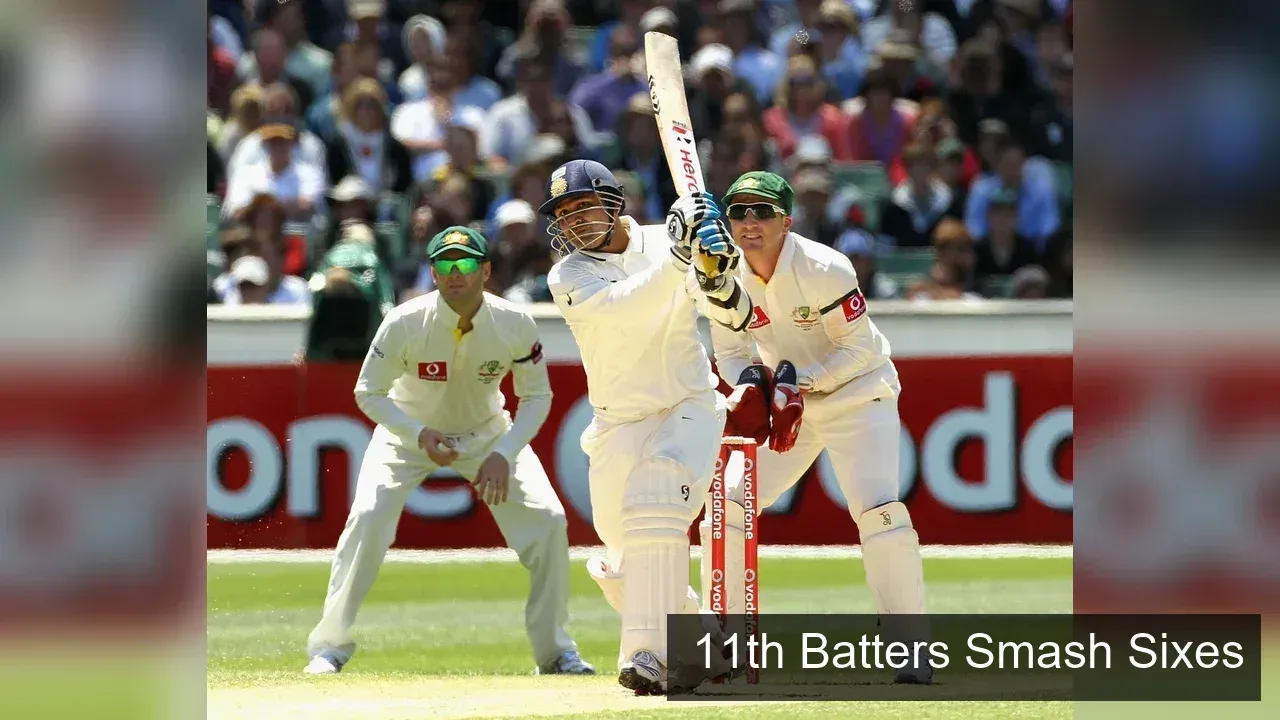
An analysis of how lower-order batting is evolving, featuring players who are breaking traditional norms with aggressive strike rates and surprising scoring patterns.
The traditional role of the No.11 batter has long been viewed as a defensive struggle for survival, but a shift in strategy is emerging. Modern cricket is seeing the rise of unexpected six-scoring machines in the lower order, where players once considered specialists in other areas are now delivering high-impact scoring bursts. This evolution is redefining the strategic value of the final batting position, turning potential liabilities into aggressive assets that can rapidly inflate a team's total.
Analyzing Hyper-Aggressive Strike Rates
The impact of the modern No.11 is best illustrated through an analysis of strike rates and scoring efficiency. In recent competitive outings, players have displayed an ability to score at rates that challenge traditional batting norms. For instance, Thomas Kaber recorded a strike rate of 600.00, contributing 6 runs in an innings. This level of aggression indicates a shift toward a "hit-or-miss" strategy that can disrupt bowling rhythms and provide sudden momentum shifts.
Similarly, Tom Fraser Rogers demonstrated a highly aggressive approach, posting a strike rate of 214.29 while scoring 45 runs off just 21 balls. When the bottom of the order adopts this mentality, the pressure shifts from the batter to the bowler, as the risk of conceding boundaries increases exponentially. This trend is further supported by players like Gulshan Jha, who maintained a strike rate of 161.54, scoring 21 runs from 13 balls in a single innings.
The Influence of High-Impact Scoring
The emergence of these scoring machines is not limited to single outliers but is seen across various player profiles. Lahiru Milantha showcased significant scoring power by recording 51 runs—the highest score in a specific set of analyzed data—from 35 balls, resulting in a strike rate of 145.71. Such contributions from the tail end of the order can fundamentally change the outcome of a match, turning a modest total into a competitive one.
Nikhil Chaudhary also contributed to this trend of efficiency, scoring 47 runs from 36 balls with a strike rate of 130.56. These figures suggest that No.11 batters are no longer playing for a draw or survival; they are playing to maximize runs in limited deliveries. The psychological impact of a No.11 scoring nearly 50 runs can demoralize an opposing side that expects a quick cleanup of the final wicket.
Strategic Variance in Lower-Order Batting
While some players lean into extreme aggression, others provide a balanced but still high-impact contribution. Rassie van der Dussen recorded 24 runs from 18 balls, maintaining a strike rate of 133.33. Temba Bavuma also displayed an aggressive edge, scoring 15 runs from 9 balls for a strike rate of 166.67. The variety in these approaches—ranging from the sheer volatility of a 600.00 strike rate to the controlled aggression of the 130-160 range—shows that teams are experimenting with how to utilize the No.11 position.
Further evidence of this strategic shift can be seen in the performances of Andries Gous and Josh Brown. Gous scored 37 runs with a strike rate of 137.04, while Brown provided a more tempered contribution of 9 runs from 12 balls, resulting in a strike rate of 75.00. The contrast between Brown's approach and that of a player like Thomas Kaber highlights the spectrum of how lower-order batters are currently being deployed.
Impact on Team Dynamics and Records
The ability of No.11 batters to act as six-scoring machines has implications for team compositions. With the inclusion of players who can deliver a strike rate over 200, such as Tom Fraser Rogers, teams can afford to be more aggressive with their wicket-taking strategies earlier in the game. The presence of these "hidden" power-hitters ensures that the tail does not simply collapse but instead provides a final, volatile burst of scoring.
The collective data from players including Gulshan Jha, Nikhil Chaudhary, and Lahiru Milantha underscores a new era of cricket records. When a No.11 batter can average 51.00 in an innings (as seen with Milantha) or 47.00 (as seen with Chaudhary), the distinction between specialists and tail-enders begins to blur. This shift forces opposing teams to rethink their death-overs bowling strategies and field placements for the final wicket.
Conclusion
The rise of the No.11 as a six-scoring machine represents a significant evolution in game strategy. From Thomas Kaber's 600.00 strike rate to Lahiru Milantha's high score of 51, the data confirms that the bottom of the order is becoming a site of unpredictability and high scoring. As lower-order batters continue to abandon caution in favor of aggression, the strategic landscape of the sport will continue to shift, making every single wicket a potential turning point in the match.